


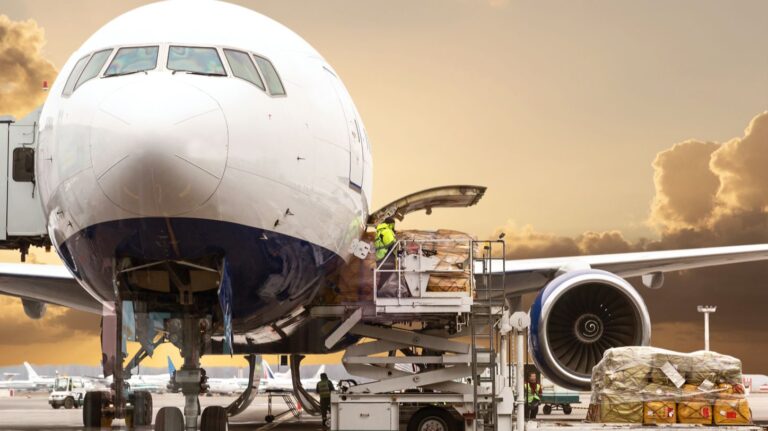
Global air cargo demand was up 3.4% year on year in 2025, with international traffic rising by 4.2%, according to the latest data from the International Air Transport Association (IATA).
IATA director general, Willie Walsh, described this as a “strong performance,” driven largely by continued growth in e-commerce.
According to IATA, full-year cargo yields fell 1.5% year on year, marking the smallest drop in three years, and remaining 37.2% above 2019 levels.
Air cargo performance in 2025 varied sharply by region.
Asia-Pacific airlines recorded the strongest growth with demand up 8.4% year on year and capacity rising 7.4%, IATA data showed.
African carriers also posted solid results, with demand increasing 6.0%, while Europe and Latin America saw modest full-year demand growth of 2.9% and 2.3%, respectively,
Middle Eastern carriers saw modest annual demand growth of 0.3%. North America was the only region to see a decline, with demand down 1.3% in 2025.
Additionally, 2025 trade lane data showed “a clear shift” in global air cargo flows from Asia–North America to Asia–Europe, which IATA attributed to tariff pressures and the removal of the US de minimis exemption. Within Asia, and the Middle East–Asia corridor also recorded strong growth, IATA noted.
“Global e-commerce strength drove volumes, even as trading relationships with the US faced rising tariffs, the removal of de minimis tariff exemptions, and continuing policy uncertainty,’ said Walsh.
IATA said it expects moderate growth of 2.4% in 2026, in line with historical trends.
“Whatever trading patterns emerge, we can be confident that reliance on air cargo to keep global supply chains running will remain, with carriers responding to the challenge by deploying capacity and designing their networks for optimum flexibility,” Walsh added.
In 2025, the Asia-Pacific region accounted for 35.9% of cargo traffic in tonne-kilometres, followed by North America (24.5%), Europe (21.4%), , Middle East (13.2%), Latin America and Caribbean (2.9%) and Africa (2.1%).