


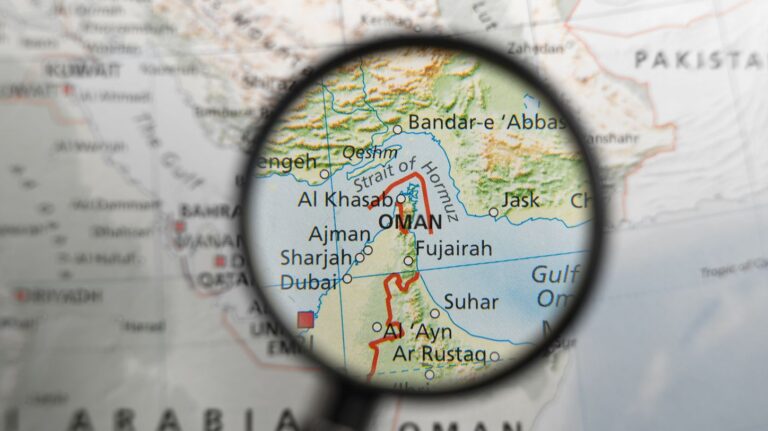
Iran, through the Islamic Revolutionary Guard Corps (IRGC), has claimed responsibility for attacks against two UAE tankers in the Strait of Hormuz, leading to a spike in global oil prices.
Oil prices jumped by 5% on 13 July following US president Donald Trump’s renewed blockade against Iran after a breakdown in negotiations following the conclusion of the 14-point Memorandum of Understanding (MoU) signed on 17 June 2026.
After the strikes, the price of Brent crude oil rose to US$87.08 (c. £65.08) a barrel, the highest price in four weeks, having now fallen slightly to $85 (c. £62) at the time of writing.
Brent crude had dropped to a year low of $72.48 (c. £61.77) a barrel, well below the peak of $120 during previous hostilities in February and April 2026.
Prices remain in flux after more ships report coming under fire. Notably, Dutch shipping firm Stolt Tankers claimed one of its tankers came under Iranian fire in the Arabian Sea near Oman.
To combat this, the US has announced that the US would reinstate its blockade of Iranian shipping in the Gulf beginning at 4pm ET on 14 July.
This comes after Trump suggested on his social media platform Truth Social that the US would impose a 20% tariff on all cargoes shipped through the strait.
After the last spate of hostilities cooled, Iran announced that it was considering imposing an ad-hoc navigation fee of $2m (c. £1.5m) per tanker with $100,000 (c. £75,000) imposed on smaller vessels.
Should the US toll come to pass on the previously free waterway, the US could accrue up to $17m per vessel – well above the 2%-3% operators pay on of the value of their goods in fees in tolled waterways.
To see the winners of the illustrious 2026 Supply Chain Excellence Awards MEA and to find out how to enter ambitious projects for the 2027 edition, please visit www.supplychainexcellenceawardsmea.com!