


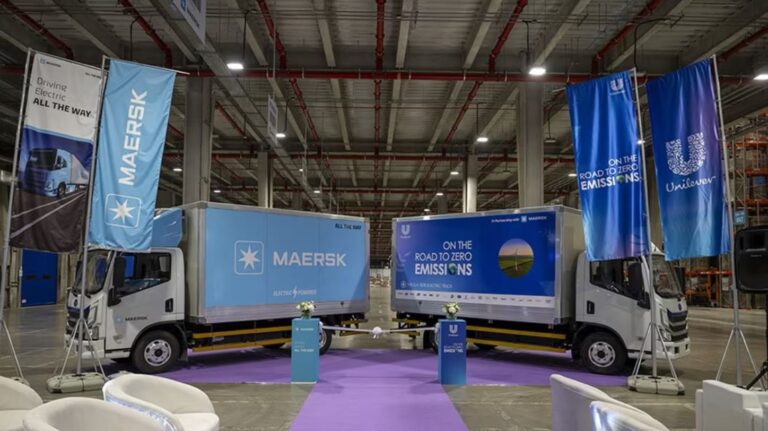
Logistics company Maersk and consumer goods giant Unilever have launched their first electric van in Saudi Arabia.
The van will serve grocery retail group BinDawood Group. It will operate within a 50km radius and cover up to 3,500km per month.
“This is the first van deployment in our Saudi fleet, and it represents our commitment to reducing logistics-related emissions wherever feasible,” commented Ahmed, Kadous, head of customer operations, Unilever Middle East, Turkey, Pakistan and Bangladesh.
“This is another building block of our emission reduction plans in partnership with Maersk. The electric van, combined with solar energy charging infrastructure, means we practically reduce emissions by 100% compared to a conventional truck.”
The electric van launch is the first step in a broader transformation to scale electric mobility across Saudi operations.
“As electric vehicle technology advances and charging infrastructure expands across Saudi Arabia, we’re seeing more opportunities to deploy emission-free trucks in place of diesel units,” added Ahmed El Esseily, managing director at Maersk Saudi Arabia.
Beyond electric vans, the companies will explore innovations such as solar-powered warehousing and intermodal transport solutions.
This follows successful consolidation of six warehouses by Unilever and Maersk into a single fulfilment centre at Maersk’s Logistics Park in Jeddah, launched in August 2024. The new hub is already delivering a 5% emissions reduction, supported by a 64,000m2 (c. 690,000ft2) rooftop solar plant and an advanced cooling system using ammonia as a natural refrigerant and seawater instead of potable water.
Maersk described the roll-out of the first electric van in Saudi Arabia as “an important milestone in decarbonising logistics operations in the Kingdom.” It also supports the Saudi Vision 2030 objectives to reduce carbon emissions by 278 million tonnes annually and increase renewable energy usage to 50%.
Submissions are currently open for the 2026 Supply Chain Excellence Awards Middle East and Africa. Entries are welcomed from end-user organisations and solutions providers, including 3PLs, technology vendors and consultancies. The entry deadline is 16 January 2026.