


Light commercial vehicle (LCV) registrations declined by 10.3% in 2025, according to the latest statistics released by the Society of Motor Manufacturers and Traders (SMMT).
Fleet renewal shrank in every month last year other than December, which posted a slight 1.7% rise, reflecting a challenging economic environment and weak business confidence, SMMT said.
Data shows 315,422 LCV registrations in 2025 compared with 351,834 in 2024. This is the lowest figure since 2022, when 282,139 units were registered.
The biggest year-on-year decline in registrations was for 2.0-2.5T (-20.7%) and 2.5-3.5T (-9.8%) vans. Registration of rigids increased 65.1% year-on-year, with 15,288 registered in 2025.
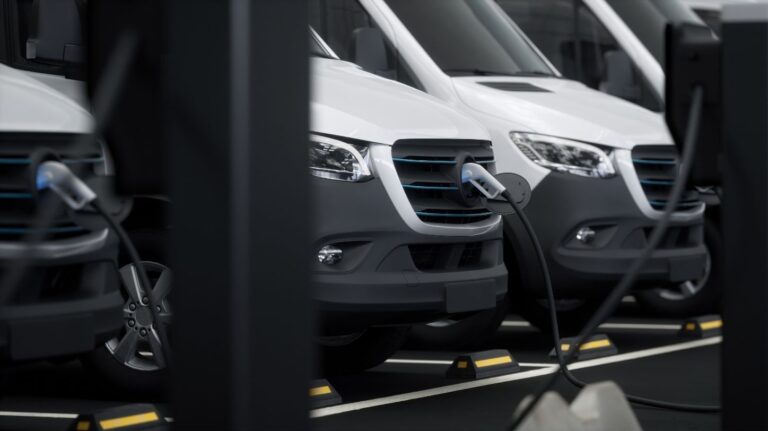
SMMT noted that electric van registrations increased by 36.2% in 2025, with a record 30,169 registrations. However, EVs only accounted for 9.5% of the market, remaining “well short” of the 16% target set in the government’s Zero Emissions Vehicles mandate.
Given the target rises to 24% in 2026, SMMT stated that “rapid improvement in public chargepoint rollout and robust government support will be vital in order to bridge the gap between regulatory ambition and market reality”.
The trade body also called for “urgent focus” on heavier vehicle decarbonisation. The UK Government recently launched a consultation on the regulatory framework for zero-emission heavy-goods vehicles and announced £18m in funding for the Plug-in Van and Truck Grants, which are available until March 2026.
According to SMMT, vehicle purchase incentives are an important for supporting fleet operators to transition but the upfront cost of depot grid connections is also a critical barrier, preventing many from even considering going electric.
Mike Hawes, SMMT chief executive said that the 2025 new van market reflects a tough economic environment which constrained fleet investment.
“While rising EV uptake is encouraging, it has come at a huge cost to industry and remains significantly adrift of ambition. Government’s upcoming review must acknowledge the unique challenges facing the light commercial vehicle sector and the additional action required, else the gap between market regulation and reality will continue to widen.”