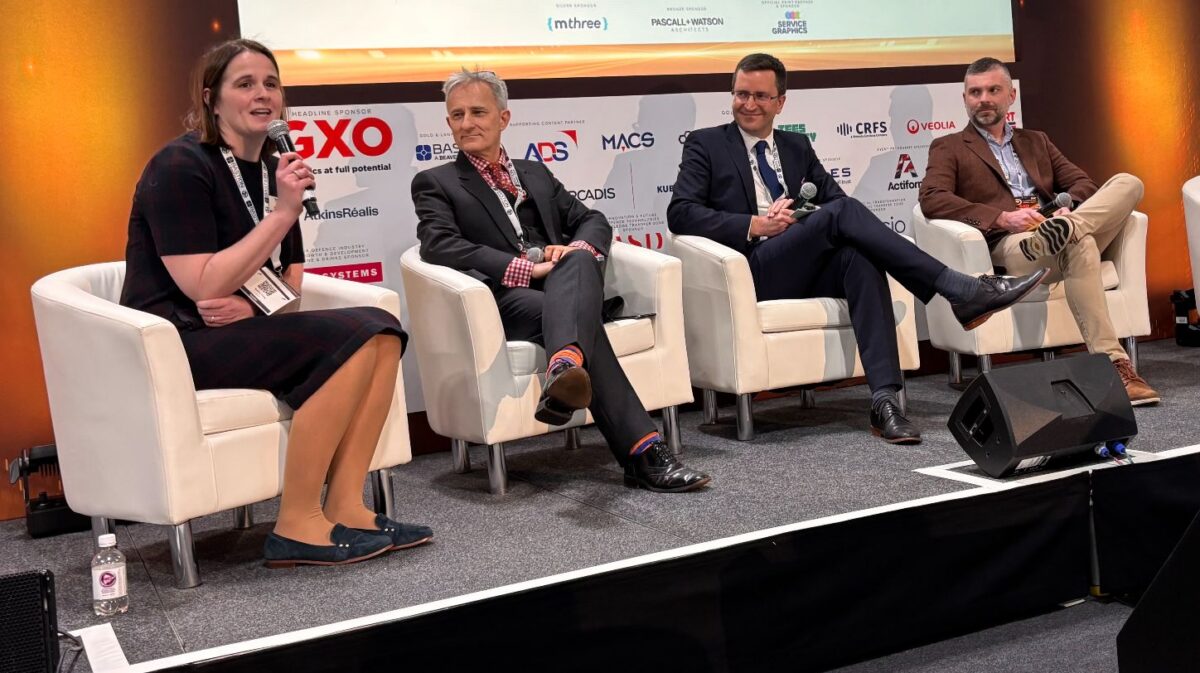


Ahead of the 30th Supply Chain Excellence Awards, Logistics Manager asked Torus Defence Supply Chain – an alliance between Accenture, Amentum, GXO and Maersk – to reflect on how the sector has changed over the past 30 years.
Defence supply chains have shifted from cost-driven, platform-centric models to resilience-led, integrated ecosystems. Since the 1990s, focus has moved toward readiness, closer industry alignment and interoperability.
Today, integrated business planning, data analytics and AI are enabling real-time coordination, visibility, and adaptability to geopolitical volatility and mission demands. Supply chains are evolving from operational support functions into decision-making capabilities that influence outcomes and strengthen defence capability.
Technology and data offer huge potential to unlock value across the supply chain and manage readiness, drive decision advantage and enable sovereign resilience. Artificial intelligence, especially agentic and predictive AI, has had the greatest impact – enabling real-time decision-making, automation and cost reductions of approximately 10–15%.
Artificial intelligence … has had the greatest impact – enabling real-time decision-making, automation and cost reductions of approximately 10-15%
Alongside AI, digital twins, integrated data platforms, and advanced analytics have transformed visibility, forecasting, and resilience, accelerating the shift toward autonomous, self-optimising supply chains. Smart technology fitted to all supplies across the chain provides complete live visibility, even on the high seas. This can enable the defence industry to get the right product, in the right location, to the right people and at the right quality when it arrives.
Supply chains have also become incrementally more resilient – through diversification, digitalisation and improved visibility – but advancing technology has also exposed new vulnerabilities and cyberthreats. Resilience has improved, but it remains uneven and under constant pressure, making it an ongoing journey rather than a destination.
Additionally, sustainability shifted from ‘nice-to-have’ to core priority in the early 2020s, as regulation, stakeholder pressure and cost volatility converged. Rising energy prices, emissions targets, and the need for end-to-end visibility embedded sustainability into performance management, so it is now tracked alongside cost, service, and resilience in modern supply chains.
The past 30 years show that efficiency alone creates fragility, as lean models and siloed data delivered cost gains but exposed risk. The next decade will see defence supply chains prioritise resilience, visibility, and adaptability, enabled by strong data foundations and AI for balancing efficiency with robustness in an increasingly volatile, geopolitically complex environment.
Defence supply chains are evolving quickly and will require the diverse capabilities of complementary and collaborative organisations to deliver strategic advantage. That’s why we have created Torus Defence Supply Chain, to draw on our alliance members’ proven capabilities and mission critical expertise.