

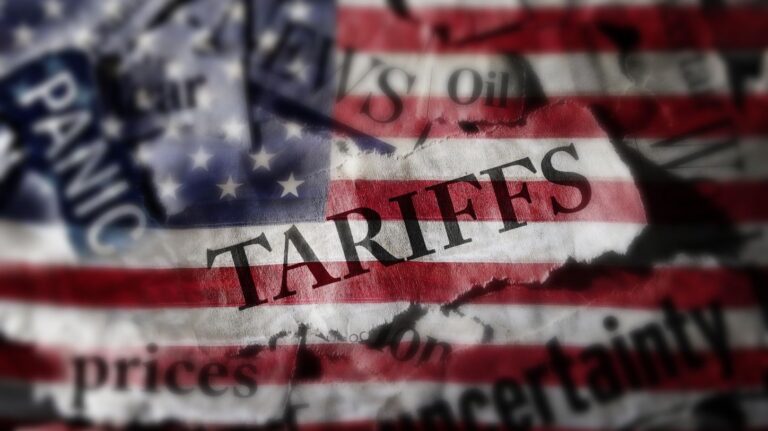
The United States has announced a new round of Section 301 tariffs targeting imports from 60 economies, citing concerns over the failure of trading partners to prohibit or effectively enforce bans on goods produced using forced labour.
The measures follow investigations launched by the Office of the United States Trade Representative (USTR) in March 2026 into whether trading partners’ policies on forced labour imports are unreasonable or discriminatory and place a burden on US commerce. Following the investigations, the USTR concluded that all 60 economies examined had failed to meet US expectations.
Under the new measures, most affected imports will face either a 10% or 12.5% tariff, depending on the country. The UK is among the economies subject to the lower 10% rate, alongside Canada, Mexico, the European Union, India, Indonesia, Malaysia and several others. Countries not included in this group will generally face tariffs of 12.5%.
A Presidential memoranda, published on 23 July, also outlines a series of exemptions covering cetrain raw materials, products considered critical to the US economy and goods that cannot be sourced domestically or from alternative suppliers.
In addition, the US plans to introduce tariff-rate quotas (TRQs) for certain textile and apparel imports from Bangladesh, Cambodia, Indonesia and Malaysia. These measures are designed to encourage greater use of US-produced cotton and textile inputs while reducing reliance on supply chains considered to present a higher risk of forced labour. The quotas are expected to be introduced from September 2026.
Commenting on the latest tariff announcements, director general of the Chartered Institute of Export and International Trade, Marco Forgione, pointed out that current UK trade figures show growth in non-EU exports, particularly to the USA. However, he warned that “the ongoing tariff uncertainty runs the risk of undermining the strengthening partnership, ultimately affecting UK businesses and US consumers”.
New 50% tariffs on certain Canadian goods
In a separate trade action, President Donald Trump has signed three proclamations under Section 338 of the Tariff Act of 1930, imposing an additional 50% tariff on a range of Canadian imports.
According to the White House, the measures are intended to respond to what it describes as Canada’s “discriminatory treatment” of US exports, particularly in the automotive, alcohol and dairy sectors.
The tariffs will apply to a range of products, including wine, hockey sticks and cement, regardless of whether they qualify for preferential treatment under the US-Mexico-Canada Agreement. However, energy products, potash, goods already subject to Section 232 tariffs, fish and certain critical minerals are exempt.
Canadian Prime Minister Mark Carney has condemned the new tariffs, describing them as unjustified, and said Canada would “do whatever it takes” to defend its interests, but no action has yet been announced.
The additional tariffs are scheduled to take effect on 19 August 2026, leaving a window for further negotiations between the two countries.
Proposal for tariffs on generic drugs from 2028
Earlier this month, US President Donald Trump revealed on Truth Social that he plans to introduce tariffs on generic drugs from 2028. Currently there are no tariffs on generics, but the proposals would increase tariffs to 100% from 2028 and then 200% a year after.
“This is done to RESHORE Generic Pharmaceutical Production into America, with a penalty to those companies that decide not to build Plant and Equipment within the stated period of time given to them.”
According to the U.S. Food & Drug Administration, as of 2025, 69% of generic drug products were manufactured outside of the USA.
IntraLogisteX is taking place in Dallas in 2026, bringing the industry’s leading trade show & conference to one of North America’s most important logistics hubs.