

Logistics executives are preparing for another year of global trade volatility in 2026, while the GCC region is positioning itself as a stable logistics and transit hub amid geopolitical and economic uncertainty, according to the ‘2026 Agility Emerging Markets Index’.
The annual Index, based on a survey of 503 logistics and supply-chain professionals worldwide, found that 86% expect volatility to increase in 2026 or consider trade, political and economic turbulence as the ‘new normal’. Companies are responding by accelerating the use of AI, tightening cost controls and reconfiguring supply chains.
Artificial intelligence adoption is near-universal across the sector, with 98% of respondents saying their companies use AI in at least one part of their supply chain.
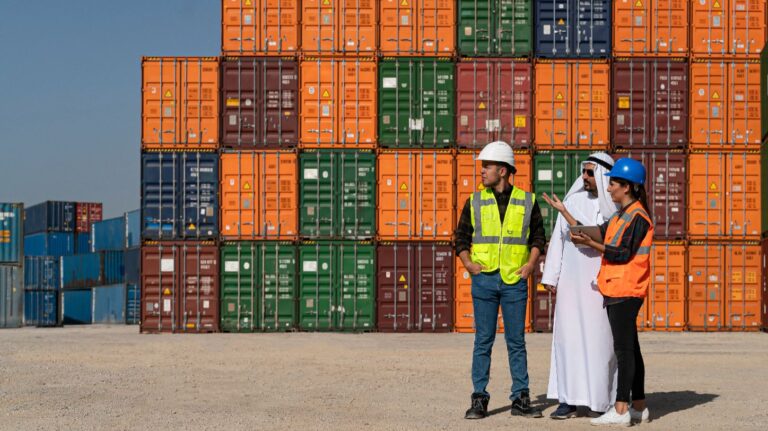
The Index highlights the growing role of the Gulf as a global logistics crossroads. Individually and collectively, the six Gulf Cooperation Council (GCC) countries are investing heavily in logistics infrastructure, digital platforms, AI deployment, energy transition and talent development. The report says these efforts are strengthening the region’s position as a hub connecting Asia, Europe and Africa.
Supply chain diversification remains an active priority for companies. The survey suggests that shifts in global production and sourcing, spurred first by the Covid pandemic, then US-China trade tensions and a wave of tariff increases.
“Volatility won’t derail Gulf ambition,” the report said, noting that GCC economies have benefited from their ability to maintain working relationships with both USA and China at a time of increasing geopolitical fragmentation.
Tariffs and trade protectionism were identified as the risks companies feel least prepared to manage. To mitigate these risks, logistics providers and shippers are increasingly relying on supplier diversification, freight consolidation and strategic warehousing, the report states.
The survey also found that sustainability initiatives are slowing across parts of the logistics industry, with 48% of respondents saying their companies are pausing or scaling back sustainability efforts, citing cost pressures, shifting business priorities and challenges in demonstrating return on investment.
In the 2026 overall rankings, China, India, the UAE, Saudi Arabia, Malaysia, Indonesia, Qatar, Mexico, Thailand and Brazil placed in the top 10 emerging markets. All six GCC countries ranked among the top performers globally for business conditions, while the UAE and Saudi Arabia ranked among the most digitally ready markets.
China, India, Mexico, the UAE and Saudi Arabia ranked highest for international logistics opportunities, while China, India, Indonesia, Qatar and Saudi Arabia led in domestic logistics performance.
John Manners-Bell, chief executive of Transport Intelligence, which compiled the Index, said the research points to “structural uncertainty” driven by geopolitical fragmentation, volatile trade policy and uneven economic growth. Logistics companies are adapting their networks rather than retreating from emerging markets, he concluded.
IntraLogisteX is the definitive event for logistics, automation, and supply chain innovation across the Gulf, the wider Middle East, and Africa. For exhibitor information and visitor registration, visit the official event website at www.intralogistexmea.com