


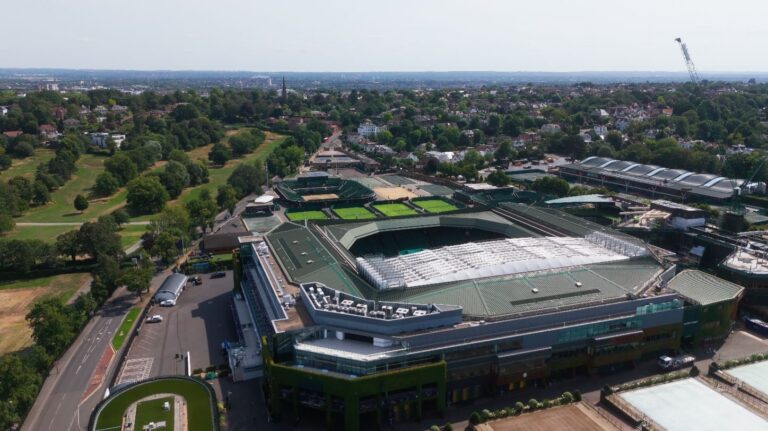
For two weeks each summer, the eyes of the sporting world turn to Wimbledon. The world’s oldest tennis tournament, first held in 1877, is synonymous with Centre Court, strawberries and cream and sporting tradition. But behind the scenes, it is also one of the UK’s most complex supply chain operations.
Delivering Wimbledon requires the coordination of thousands of suppliers, contractors and staff, the movement of vast quantities of food, drink and equipment, as well as the management of hundreds of thousands of visitors. From forecasting food demand and coordinating daily deliveries to maintaining cold chains, managing real-time logistics and preparing for disruption, resilience is built into every aspect of the event.
Ahead of this year’s Championships, Logistics Manager spoke to Rozlyn Combe, associate director of operations at the All England Lawn Tennis Club, about the supply chain that keeps one of the world’s most prestigious sporting events running smoothly.
How would you describe the scale and complexity of the supply chain required to deliver The Championships at Wimbledon?

Rozlyn Combe: Wimbledon is far more than a tennis tournament, it is a highly complex, global supply chain operation delivered in an extremely compressed timeframe. Over the two-week Championships, more than half a million spectators are hosted, supported by around 6,000 staff, and supplied with hundreds of thousands of food and drink items, including over 200,000 portions of strawberries and cream and more than 50,000 tennis balls.
Behind this sits a globally integrated supply chain, with items such as tennis balls travelling tens of thousands of miles through multi-country production networks before arriving on site.
Internally, operations rely on tightly controlled delivery systems, coordinated supplier networks, and precise scheduling of vehicles, inventory, through a master delivery schedule.
The Championships are delivered within a very compressed timeframe, with little room for disruption. How do you build resilience into such a high-pressure operation?
RC: We build resilience through a disciplined readiness programme that goes beyond planning to include testing, desktop exercises and rehearsals. This allows us to validate roles, decision-making and command structures, and to ensure that our people, contractors, suppliers, processes and systems are tested in realistic scenarios before go-live.
The programme is phased early enough to reduce last-minute pressure and avoid conflicts. We also benefit from a strong base of returning staff with valuable operational knowledge, all of whom complete training and orientation each year.
What are the biggest operational risks you plan for each year?
RC: The key operational risks for The Championships reflect both the scale and the nature of delivery. Weather remains one of the most significant risks, [while] transport disruption across road, rail and last‑mile movement can quickly affect spectator flow, particularly given the volume of daily journeys to site and mass egress.
Labour and workforce availability is also key, given the reliance on thousands of temporary staff and specialist contractors. Increasingly, cybersecurity and systems resilience are treated as core operational risks due to the dependence on accreditation, logistics systems, and real-time communications.
Collectively, these risks are managed through detailed planning, testing and coordination across suppliers, systems and operational teams, recognising that there is limited margin for disruption once the event is live.

How do you manage forecasting, cold chain logistics, supplier coordination and sustainability across Wimbledon?
Compass Group UK is our catering partner, and we utilise its extensive supply chain network. Forecasting, and management of both the delivery and movement of goods around site is managed by our year-round logistics team.
We benefit from years of sales and consumption data that allows us to forecast requirements in advance of the tournament. However, because The Championships take place across a fortnight, and we receive deliveries throughout, we are able to monitor consumption and adjust our volumes accordingly to minimise waste / ensure we are suitably provisioned.
Our focus from a food and drink perspective is on British suppliers and peak seasonality, with no food and drink arriving at The Championships by airfreight. This is a key principle not only of our culinary philosophy but also part of our environment positive approach.
Our strawberries arrive from Hugh Lowe Farms in Kent (located 31.5 miles from Wimbledon) each morning of The Championships. We are in constant communication with the team at Hugh Lowe, with whom we have worked for almost 30 years. Our volumes are planned in advance, but can be adjusted throughout the fortnight accordingly. Any additional berries not used during The Championships are used to make jam for our year-round business.
How important is visibility and real-time operational data during the tournament itself?
Visibility and real-time operational data are critical during The Championships, given the pace, scale and interdependency of activity across the site. With thousands of daily deliveries, multiple suppliers, and constant movement of people, inventory and vehicles, operations rely on live oversight of schedules and crowd movement.
This real-time visibility allows teams to identify issues early, rebalance resources, and respond immediately to emerging risks, congestion or demand. In practice, it enables a control-style approach to operations, ensuring decisions are based on current conditions rather than static plans; something that is essential in an environment where there is little margin for error once play is underway.
The Supply Chain Excellence Awards, includes and Event Logistics category. Enter by 3 July on the official website