


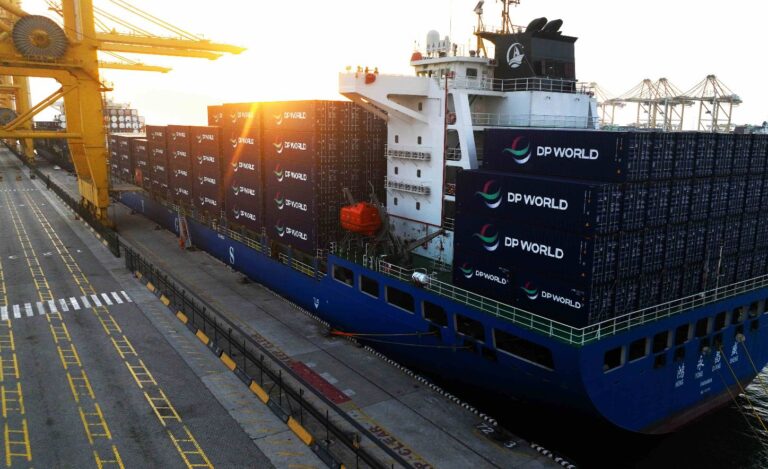
DP World is expanding its integrated logistics capabilities as ongoing disruption across global shipping corridors accelerates the shift toward multimodal, corridor-based supply chains.
With geopolitical uncertainty, port congestion and climate-related pressures continuing to reshape trade flows, businesses are increasingly prioritising flexibility and resilience. In response, DP World is strengthening the integration of sea, rail and road networks to support cargo movement.
The shift comes as the global multimodal transport market is forecast to reach nearly US$160bn (c. £119bn) by 2032, reflecting growing demand for agile, visible and reliable supply chains.
DP World is already operationalising this approach across its network. Its Marine Services division connects more than 200 ports worldwide, supporting over 23,500 sailings annually, while its Shipping Solutions business handles around 6 million TEU. These services are increasingly linked with inland transport capabilities, enabling more seamless cargo flows beyond port gateways.
According to DP World analysis, this corridor-based model is particularly relevant as supply chains evolve from traditional linear structures into interconnected regional networks. Businesses are seeking transport systems that can adapt across multiple modes while maintaining visibility and reliability throughout the journey.
Ganesh Raj, global COO, Marine Services at DP World, said: “As supply chains face increasing disruption, the ability to connect ports, marine services, rail and road into integrated trade corridors is becoming essential.”
Sign up to receive Logistics Manager’s bi-weekly MEA newsletter