


Rising fuel costs are accelerating interest in alternative-fuel vehicles among UK transport operators, although less than 40% have adopted them, according to new research from GXO Logistics.
The company’s latest Future of Transport survey of more than 1,000 UK supply chain, transport and logistics decision-makers found that 63% say rising fuel costs are accelerating their interest in alternative-fuel vehicles.
However, only 38% currently operate alternative-fuel vehicles, despite 87% identifying emissions reduction as a key priority.
Additionally, more than three-quarters (76%) said demonstrating cost savings or operational efficiencies was essential to securing investment in lower-emission transport.
The findings come against a backdrop of rising fuel costs, adding to the financial pressures facing UK fleet operators.
UK diesel prices reached 200.04p per litre, up from 142.99p a year earlier, according to the Department for Energy Security and Net Zero’s figures for this week, beginning 12 October.
High upfront vehicle costs, uncertainty over future fuel technologies and concerns about infrastructure are among the barriers delaying investment decisions in low-carbon fuels, according to GXO.
FREE WEBINAR: Move from reactive to preventative maintenance with Samsara
However, operators are focusing on measures to improve the efficiency of existing fleets. The survey found that 43% are reducing part-loads, 41% are cutting empty running, 41% are exploring fleet sharing and 39% are optimising routes.
Carl Hanson, managing director, transport, GXO UK & Ireland, said: “Decarbonisation and commercial performance cannot be treated as competing priorities. The findings show that businesses need practical solutions that deliver efficiencies now while preparing their fleets for a range of future fuels.”
The research also found that 70% of logistics leaders expect gas-powered fleets using LNG or CNG to be a viable and affordable option by 2028, compared with 68% for electric HGVs, 64% for biofuels and 62% for hydrogen.
However, only 25% of businesses have begun investment planning for charging or refuelling infrastructure, while 30% have started procurement planning for future energy requirements.
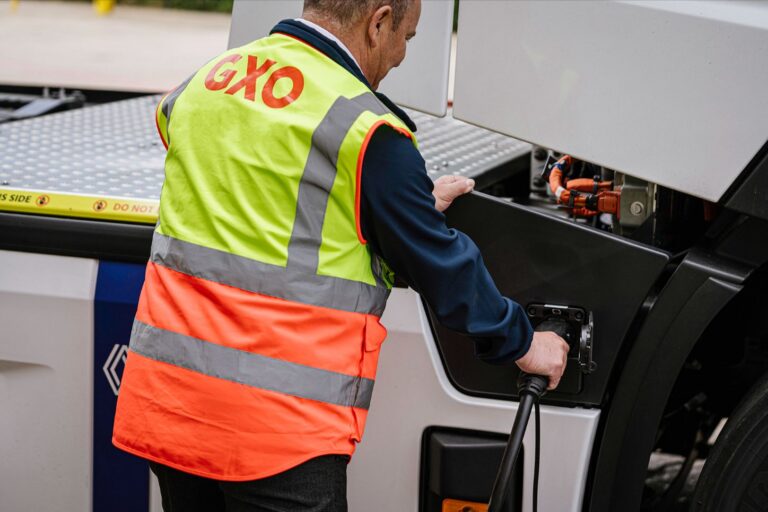
GXO is participating in the UK’s Zero Emission HGV and Infrastructure Demonstrator (ZEHID) programme, which is testing electric HGVs and supporting charging infrastructure in commercial freight operations. The first annual report on the programme shows HGVs participating in ZEHID have travelled more than 2.2 million miles and transported over 550,000 tonnes of freight.