


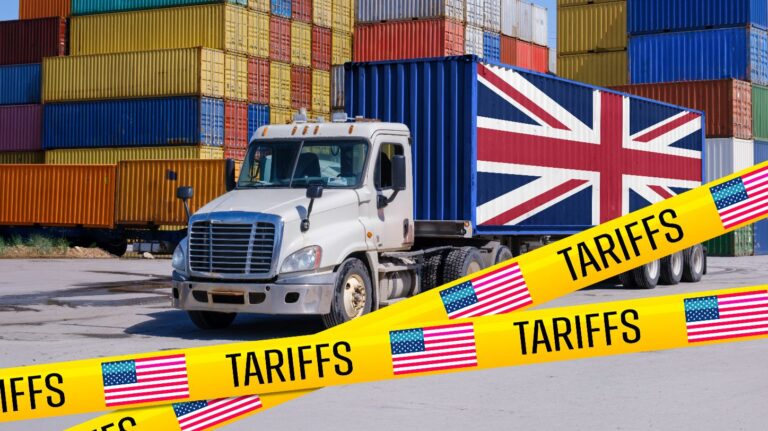
UK manufacturers are adjusting export flows, market exposure and sourcing strategies as tariffs, trade friction and border complexity increase operational risk for international supply chains, according to new research from Make UK and DHL Express.
The ‘International Trade Trends 2026: UK Manufacturers in Global Markets’ survey shows that changes in global trade policy are already influencing shipment timing and market choice as companies balance tariff exposure.
According to the survey, the USA remains a major export lane for UK manufacturers, with six in ten currently trading with the market. However, tariff-related disruption is reshaping how those flows are managed. One in four manufacturers reported balance sheet impacts linked to additional tariff costs, while nearly a quarter said they accelerated exports to the USA in early 2025 to move goods ahead of anticipated tariff increases.
At the same time, manufacturers are actively reducing concentration risk. Almost one in four said they have shifted export volumes towards non-US markets, while one in five have already reduced or ceased exports to the USA. A further 16% plan to do so, although a quarter of exporters said they have made no changes, underlining the uneven impact of tariffs across sectors and supply chains.
The research suggests that while the USA remains an important destination, manufacturers are placing greater weight on alternative trade lanes, particularly into Asia and Oceania.
Beyond market selection, the survey highlights structural pressures affecting cross-border operations. Eight in ten manufacturers said tariffs have affected their business in some form, while 58% identified tariffs and trade rules, including rules of origin, as a “major obstacle to exporting”.
Half of respondents cited customs delays as a significant operational challenge, pointing to increased documentation requirements, inconsistent processes and limited clarity at borders.
UK trade confidence prevails despite uncertainty
Despite these challenges, the research found manufacturers remain active internationally. Almost 80% said they are confident in the UK’s overall trade prospects, signalling continued demand for logistics, express, customs brokerage and trade compliance services. Many are also placing greater emphasis on product origin, with 85% highlighting the “Britishness” of their goods in overseas markets.
Stephen Phipson CBE, chief executive of Make UK, acknowledged that manufacturers are under growing pressure from tariffs, geopolitical risk and supply chain disruption.
“Tariffs and trade friction in global markets are creating uncertainty and disrupting long-standing customer and supply chains. Many businesses are responding by diversifying exports, adjusting supply chains, or scaling back activity to manage rising costs and delays,” he said.
John Cornish, CEO, DHL Express UK, added that manufacturers are recalibrating trade rather than withdrawing from it, noting: “After years of disruption, businesses are taking a more deliberate and strategic approach to where and how they export, balancing risk while still pursuing growth overseas. In this context, we’re seeing British manufacturers diversify to a certain extent and strengthen trade with countries that pose less geopolitical risk or that benefit from trade agreements with the UK.”
The research also points to changes in sourcing patterns that may impact domestic and regional freight demand.
It suggests that 63% of manufacturers will source more of their materials domestically over the next five years, up from 49% since 2020.