

The U.S. Department of Energy has pledged US$500m (c. £366m) for seven domestic projects to expand critical mineral and material processing, battery manufacturing and recycling capacity.
The funding forms part of wider US efforts to develop domestic critical mineral and battery supply chains and reduce reliance on overseas suppliers, particularly China.
The awards are being made through the Manufacturing Deployment Office, part of DOE’s Office of Critical Minerals and Energy Innovation (CMEI). They form part of the third round of funding from DOE’s Battery Materials Processing and Battery Manufacturing and Recycling programs.
“DOE is taking decisive action to secure the critical supply chains necessary to power our nation,” said Assistant Secretary of Energy Audrey Robertson. “These projects underscore DOE’s commitment to driving innovation, reducing reliance on foreign sources, and promoting American energy dominance.”
The seven projects
The projects selected for funding span lithium and cobalt processing, battery recycling and the domestic production of key battery materials and components.
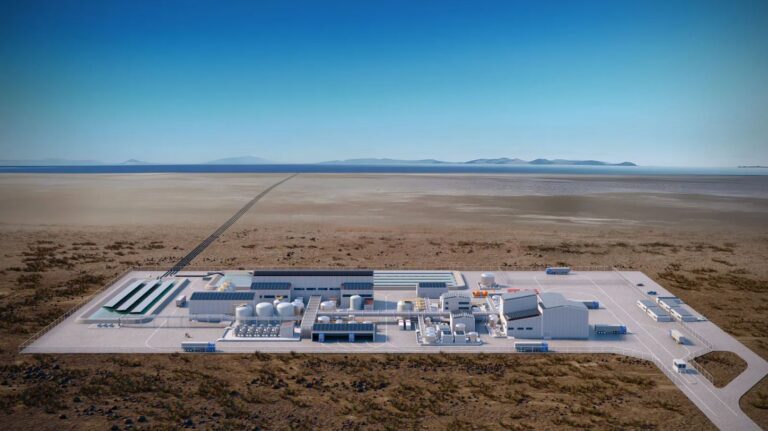
Waterleaf P1 HoldCo, a subsidiary of direct lithium extraction technology provider Lilac Solutions, has been awarded US$100m to support the construction of a commercial lithium extraction and refining facility on the Great Salt Lake in Utah. Phase 1 is expected to produce 5,000 tonnes per year of battery-grade lithium carbonate by 2028, doubling current US lithium production, while a second phase is expected to increase production to up to 20,000 tonnes per year.
Jervois has also been awarded US$100m for a project to build a commercial cobalt refinery, which is expected to be the only facility of its kind in the USA. This refinery will produce battery‑grade cobalt sulphate and related materials.
Nth Cycle, which has been selected to receive up to US$100m, aims to build a facility that refines black mass from end‑of‑life lithium‑ion batteries and manufacturing scrap into high‑purity metals and battery‑grade materials. Designated Project SHIELD (Strategic Hub for Industrial Electroextraction & Logistics Defense), the facility will refine up to 24,000 tonnes of domestic black mass annually, converting it into high-purity nickel mixed hydroxide precipitate (MHP) and battery-grade lithium carbonate for military systems, AI data centres, electric grid storage and transportation.
Princeton NuEnergy has been awarded US$50m to build a demonstration facility in Commerce, Georgia, to recover and rejuvenate nickel‑containing cathode material from battery manufacturing scrap using a low‑temperature plasma process.
Three further US$50m awards have been made to companies in the battery manufacturing space.
Arcanum Ventures aims to construct a facility on the US Gulf Coast to produce battery‑grade ethylene carbonate, while Elevated Materials’ project is for a US facility that can produce ultra‑thin lithium‑metal films and prelithiated materials that enable higher‑energy, faster‑charging batteries. Finally, California-based Coreshell Technologies plans to establish US manufacturing capacity for silicon‑anode lithium‑ion electrodes and cells, replacing imported graphite with domestically sourced metallurgical silicon.
Table bookings and partnership opportunities for the 2026 Supply Chain Excellence Awards USA are available. For more information, please visit: www.supplychainexcellenceawardsusa.com