

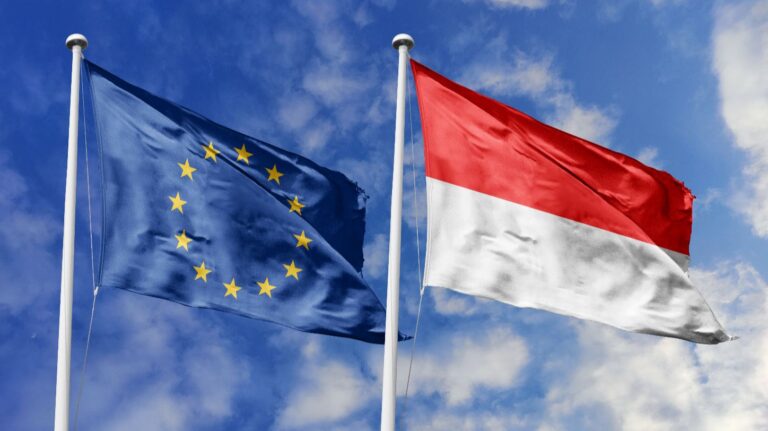
The European Union (EU) and Indonesia have signed a Comprehensive Economic Partnership Agreement (CEPA) and an Investment Protection Agreement (IPA) strengthening economic ties.
The deals, signed on 21 November, will open major EU export opportunities to a market of 280 million consumers.
They are part of the EU’s broader efforts to diversify its trade relations, expand its network of international partnerships and strengthen the resilience of its economy.
Once fully implemented, up to 98.5% of tariff lines will be liberalised, with 96% of Indonesian tariffs set to disappear within five years.
“These agreements will make it easier for European businesses to trade and invest, remove tariffs on almost all goods traded between the EU and Indonesia, and save businesses an estimated €600 million annually in customs duties,” said Helen McEntee, minister for foreign affairs and trade of Ireland.
Trade opportunities reportedly span agri-food, automotive, textiles, footwear, chemicals, pharmaceuticals, machinery and electrical equipment. The deals are also expected to help deepen cooperation on energy and critical raw materials.
Indonesia is a world-leading producer of nickel and cobalt. The CEPA will provide EU manufacturers with stability and predictability in accessing these materials, strengthening EU’s supply chains and protecting them against geopolitical or economic shocks.
It also provides an export duty-free quota for crude palm and palm kernel oil.
The two agreements will require the European Parliament’s consent and ratification by Indonesian authorities. Once these processes have concluded, the agreements will be provisionally applied, likely in early 2027.
The Supply Chain Excellence Awards APAC takes place at the Grand Copthorne Waterfront Hotel Singapore on 1 December 2026. To attend visit the official Supply Chain Excellence Awards APAC website