

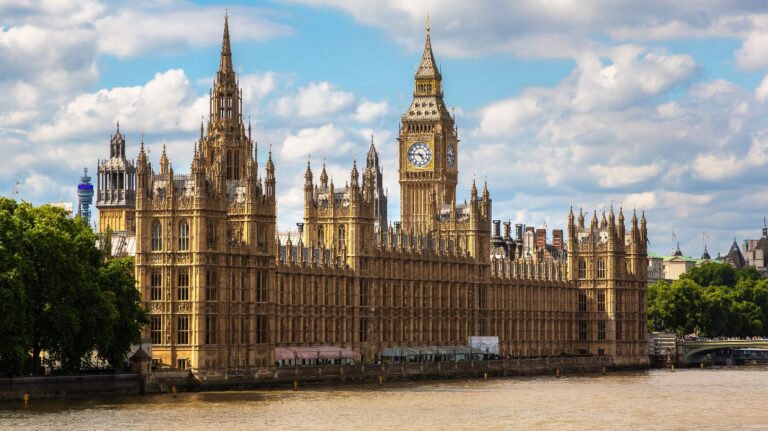
The UK government has used the King’s Speech to set out a legislative programme including measures on road infrastructure funding, rail reform, UK-EU trade, energy security and late payments, with several proposals carrying implications for logistics and supply chain businesses.
While the speech did not include a dedicated logistics or supply chain bill, the accompanying government briefing notes set out proposals affecting freight movement, cross-border trade, SME cashflow and long-term infrastructure delivery.
Among the measures most relevant to logistics operators is the Highways (Financing) Bill, which is intended to introduce a new financing approach for large-scale road schemes, including the Lower Thames Crossing.
According to the government, the bill will introduce a new Regulated Asset Base funding model to unlock greater levels of private capital investment in road infrastructure. The model is expected to support future road projects in England, with the Lower Thames Crossing named as the first road scheme expected to use it.
The government’s briefing notes state that a strong transport network “allows freight to run smoothly” and that around 80% of freight journeys are made by road.
The King’s Speech also confirmed legislation to establish Great British Railways through the Railways and Passenger Benefits Bill. Although much of the bill is focused on passenger services, the government said it would include duties to protect and grow rail freight.
The briefing notes state that freight will be considered within Great British Railways’ planning and decision-making through two new statutory duties. The government said this would create a single strategic body with the levers to support progress toward freight targets.
The European Partnership Bill could also affect cross-border supply chains, particularly for food, drink, retail, grocery and agri-food operators. The government said the bill would help implement new UK-EU agreements covering food and drink, emissions trading and electricity.
According to the briefing notes, the food and drink agreement alone could add up to £5.1bn a year to the economy, increase agricultural exports to the EU by 16% and reduce queue times for lorries at the border. The government also said the agreement would simplify the movement of food and plants between Great Britain and Northern Ireland, while retaining Northern Ireland’s access to the EU single market.
The legislative programme also includes energy measures, with the government positioning energy security as part of its wider economic security agenda. For logistics operators, grid capacity and energy infrastructure remain important issues as businesses invest in warehouse automation, depot charging, electric vans and trucks, cold chain operations and lower-emission fleet strategies.
The Small Business Protections (Late Payments) Bill is expected to be relevant to smaller firms across logistics, transport, warehousing and supply chain services.
The bill would impose maximum payment terms of 60 days, with limited exemptions, and enforce mandatory interest for late payments at 8% above the Bank of England base rate. It would also introduce a time limit for raising invoice disputes and give the Small Business Commissioner powers to investigate poor payment practices, adjudicate disputes outside the court process and fine businesses that persistently pay suppliers late.
The government said the bill is intended to improve cashflow through supply chains, although the measures will apply only to UK-to-UK business transactions and will not affect global supply chains or international trade.
Responding to the King’s Speech, Shevaun Haviland, director general of the British Chambers of Commerce (BCC), said there were positives for business, including action on late payments, trade with the EU and apprenticeships.
However, Haviland said there were also “significant gaps”, including a lack of clear progress on business rates reform. She added that businesses needed faster progress on grid reform, infrastructure and planning.
Haviland said: “Although there was a great deal of emphasis on the UK’s economic security there was little detail on strengthening our supply chains.”
The BCC had previously warned that concern about business rates had risen to 41% of firms in its Quarterly Economic Survey for Q1 2026, with concern highest in hospitality, retail, manufacturing and logistics. Its research found that 48% of logistics firms were worried about business rates.
Other measures announced in the King’s Speech include the Civil Aviation Bill, which the government said would unlock the benefits of airport expansion, and the Northern Powerhouse Rail Bill, intended to support improved east-west rail connectivity in the North of England.
IntraLogisteX takes place on 17-18 March 2027 at the NEC Birmingham. For exhibitor information and visitor registration, visit the official event website at www.intralogistex.co.uk