


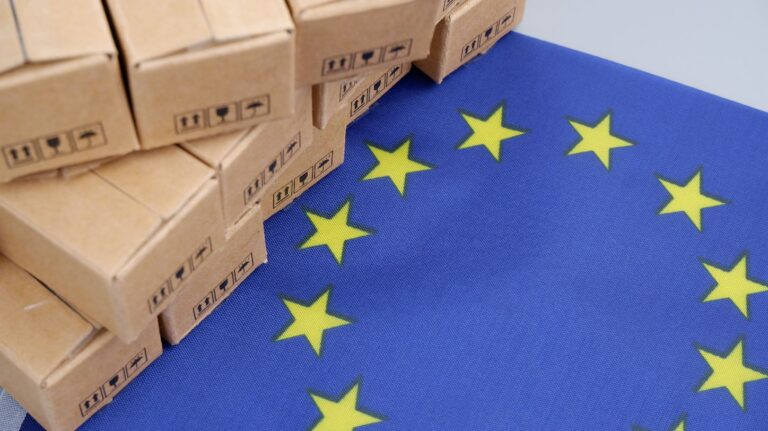
The EU’s Packaging and Packaging Waste Regulation (PPWR) applies from 12 August 2026, with new requirements expected to reshape the way products are packaged over the coming years.
“The new Packaging and Packaging Waste Regulation is an investment in Europe’s future: it will help reduce waste, increase recycling, make food-contact packaging safer for the consumers by limiting harmful substances such as PFAS, and reduce our dependence on virgin raw materials,” said Jessika Roswall, commissioner for environment, water resilience and a competitive circular economy.
“These are essential steps towards a truly circular economy.”
The PPWR covers all packaging placed on the EU market, including transport packaging such as pallets, containers and crates. It is intended to help tackle the environmental challenges caused by packaging and make Europe less dependent on imported fossil fuels.
The regulation will be phased in over time.
From 12 August 2026, manufacturers, importers, distributors and fulfilment service providers have defined responsibilities for ensuring packaging complies with the regulation. For logistics companies, this includes ensuring that handling, warehousing and dispatch processes do not compromise packaging compliance. The regulation also establishes wider requirements to minimise packaging weight and volume and increase recyclability and reuse.
From 2028, a harmonised labelling system for packaging will begin to apply across the EU to facilitate waste sorting and improve the efficiency of recycling and composting waste streams. Requirements around reusable packaging will also increase the importance of reverse logistics and packaging asset management.
The biggest changes for logistics and e-commerce are anticipated from 2030. Grouped, transport and e-commerce packaging will generally be subject to a maximum empty-space ratio of 50%. At the same time, 40% of specified transport packaging will generally need to be reusable, alongside a 10% reuse target for grouped packaging, subject to exemptions and detailed conditions. From 2030, recyclability performance grades and minimum recycled-content requirements will also start to apply to many types of plastic packaging.
93% of British businesses expect PPWR impact
The new regulation is expected to have a widespread impact on British businesses, with a survey of 200 companies by Advanced Supply Chain finding that 93% have been affected or expect to be impacted by the PPWR.
Specifically, the research found that 16% of the non-food supply chain companies surveyed had already reformatted their packaging to comply with the new regulations, while 39% are making changes to packaging and 32% are reviewing and assessing packaging formats.
Stuart Greenfield, UK and European sales director at Advanced Supply Chain, said: “Although the PPWR is an EU regulation, it’s not unusual to see businesses applying PPWR principles to packaging used outside the EU. British businesses want to continue trading seamlessly with customers across Europe, and many are standardising packaging formats to support compliance, control costs and simplify retail logistics across multiple markets.”
Meanwhile, UK businesses exporting food, drink, household, health and beauty, and personal care products into the EU are being urged to review their operating models for managing pallets, containers and other transport packaging used across their supply chains.
Katie Ingham, commercial director at pallet pooling leader CHEP, explained: “For British exporters, that means pallets and containers can no longer be treated as a low-profile operational issue, because businesses will need to show how those assets move through a genuine reuse system.”
She urged companies to act now to review their responsibilities, recovery processes and supporting data to manage compliance risk and keep goods moving smoothly across Europe.
The Supply Chain Excellence Awards celebrate the organisations, teams and projects driving improvement across supply chain operations, logistics, technology, sustainability, manufacturing, retail, healthcare and the public sector. Tables are now available to book for the awards ceremony on 5 November at The Great Room, Grosvenor House.