


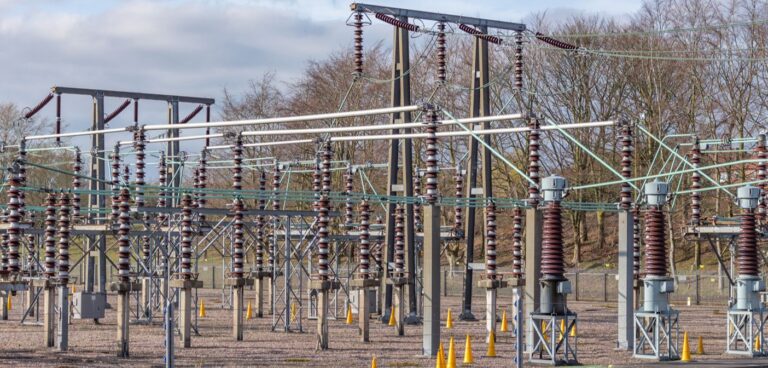
UK Prime Minister Andy Burnham has identified slow and costly electricity grid connections, regional infrastructure gaps and high energy costs as barriers to UK growth, as he set out plans for a more regionally focused programme of reindustrialisation.
Making his first major statement to the House of Commons as Prime Minister on 1 September, Burnham said businesses were waiting too long to secure connections to the electricity grid, while the cost of bringing those connections forward could deter investment.
“It is taking far too long for businesses to get grid connections,” Burnham told MPs, adding that companies could face “prohibitively expensive sums of money” if they sought earlier connection dates.
He said long waits for grid access were damaging inward investment and that serious reform was needed to tackle the issue.
Grid availability has become an increasingly important consideration for logistics businesses investing in electric vehicle charging, automated warehousing, cold storage and other energy-intensive infrastructure.
Burnham also linked weak regional infrastructure more broadly to the UK’s economic performance, arguing that underinvestment in parts of the country was holding back growth, productivity and living standards.
The Prime Minister used the statement to set out a wider economic approach based on devolution, local industrial strategies and what he described as the “re-industrialisation of our regions”.
He said areas without existing devolved arrangements would be offered opportunities to pursue new deals, while local and mayoral authorities would be encouraged to identify priority sectors and work more closely with business, universities and central government.
The approach builds on Burnham’s experience as Mayor of Greater Manchester and comes as the government seeks to translate its Modern Industrial Strategy into stronger investment and growth across UK regions.
Energy infrastructure will form part of that agenda. Burnham said high energy costs were affecting business competitiveness and inward investment, while a wider 10-year plan for Britain, due later this year, is expected to set out further proposals around infrastructure, investment and economic reform.
Manufacturers have broadly welcomed the focus on grid connections and industrial growth.
Make UK has called for faster grid connections, lower energy costs and more internationally competitive electricity prices to form part of the government’s growth agenda.
Responding to Burnham’s appointment as Prime Minister earlier this year, Make UK said the government needed to turn industrial strategy ambitions into practical improvements in the cost and conditions of doing business.
The logistics sector has also welcomed the direction of travel.
Ben Fletcher, chief executive of Logistics UK, said: “The new Prime Minister’s first statement to the House of Commons today contained much for the logistics industry to welcome.
“Commitments driving economic growth across all parts of the country, addressing slow and costly grid connections and increasing construction activity all align with the priorities of Logistics UK’s members, who keep the economy moving by delivering everything that businesses and consumers rely on.
“I welcome the Prime Minister’s commitment to leveraging devolution to foster a pro-business environment and help more young people into work. We stand ready to support the government in reindustrialising and accelerating growth across the UK.”
The significance of grid reform for logistics extends beyond general business energy costs.
Fleet electrification increasingly requires operators to secure sufficient electricity capacity for depot charging, while warehouses and distribution centres are also becoming more dependent on electricity as businesses deploy automation, robotics, refrigeration, renewable generation and battery storage.
Logistics UK has previously warned that the availability, price and lead time of grid connections can prevent operators from investing in electric commercial vehicles and associated charging infrastructure.
The organisation has also called for more clarity on grid capacity and a more efficient connections process for businesses planning long-term fleet and infrastructure investment.
Burnham’s statement did not set out a detailed mechanism or timetable for reforming the grid connection system, meaning further detail will be needed before businesses can assess how quickly conditions might change.
His wider reindustrialisation agenda is also likely to have implications for logistics property, freight demand and supply chains if it results in greater manufacturing activity and investment outside London and the South East.
For logistics operators and developers, the key test will therefore be whether the government’s focus on infrastructure, devolution and reindustrialisation translates into faster access to grid capacity, improved regional connectivity and greater certainty around long-term investment decisions.