


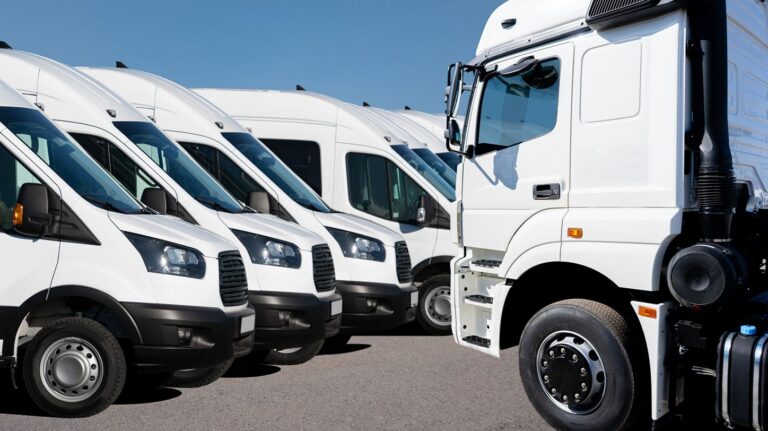
The Conservatives have pledged to scrap planned deadlines for ending sales of new diesel vans and HGVs if the party returns to government, arguing that the transition risks increasing costs for hauliers, businesses and consumers.
Under current government policy, all new cars and vans must be zero emission by 2035. For HGVs, sales of new non-zero-emission vehicles weighing up to and including 26 tonnes are due to be phased out from 2035, with all remaining new non-zero-emission HGV sales ending by 2040.
The Conservative proposal would remove the deadlines applying to commercial vehicles. The party has argued that forcing operators to switch before zero-emission vehicles and supporting infrastructure are commercially viable risks increasing haulage costs, with knock-on effects for businesses and household prices.
The pledge represents a reversal of policy introduced under the previous Conservative government. The HGV phase-out dates were first announced at COP26 in 2021, with the government at the time arguing that setting clear deadlines would give logistics and automotive businesses certainty to plan investment in vehicles and infrastructure.
The deadlines apply only to sales of new vehicles. Existing diesel HGVs can continue to operate and can still be bought and sold on the second-hand market after the phase-out dates.
The latest intervention comes as the current government invests heavily in accelerating the transition of commercial vehicle fleets.
In March, the Department for Transport announced £1bn of support for zero-emission vans, trucks and depot charging infrastructure. Of this, £877m has been allocated to the Zero Emission Van Grant and Zero Emission Truck Grant through to 2030, with £171m allocated to the Depot Charging Scheme.
The grants can reduce the purchase price of qualifying zero-emission vans by up to £5,000 and the heaviest eligible trucks by up to £81,000. Government modelling suggests the funding could support around 250,000 zero-emission van grants and 20,000 truck grants by 2030, although ministers have acknowledged that uptake projections remain uncertain.
In a statement supplied to Logistics Manager following the Conservative announcement, DHL said freight decarbonisation should take account of the different operational requirements faced by fleets.
A DHL spokesperson said: “DHL supports the UK’s net zero ambitions and believes HGV decarbonisation should be practical, technology-neutral and use-case-led. Electric trucks will play an important role, but they are not yet suitable for every application.
“Sustainable and lower-carbon fuels such as biomethane and HVO can contribute towards reducing CO2e emissions at scale today, whilst zero-emission HGV technology, infrastructure and renewable energy continue to develop and mature.”
DHL’s position reflects wider concerns within the logistics sector about relying exclusively on zero-tailpipe-emission technologies before suitable vehicles and infrastructure are available across every freight application.
Logistics UK has called for a technology-neutral approach to HGV decarbonisation, arguing that low-carbon fuels can deliver emissions reductions while battery-electric technology remains commercially or operationally unsuitable for some use cases.
The organisation’s head of decarbonisation policy, Lamech Solomon, said earlier this year that high electric HGV costs, insufficient public charging infrastructure and the expense and time involved in securing grid upgrades were continuing to restrict fleet electrification. Logistics UK research found that 80% of surveyed operators were unable to install charging infrastructure with sufficient capacity at their sites.
However, Logistics UK has not called for the phase-out dates simply to be abandoned. Its response to the government’s HGV emissions consultation supported the 2040 deadline for HGVs above 26 tonnes and said the 2035 date for lighter HGVs appeared achievable, while arguing that vehicles capable of operating on appropriate low-carbon fuels should be treated differently.
The Road Haulage Association (RHA) has similarly warned that significant barriers remain to meeting the existing timetable.
Responding to the government’s HGV emissions consultation in March, RHA managing director Richard Smith described the phase-out dates as “ambitious” and identified vehicle cost and infrastructure as key concerns, warning that there were significant risks to delivery without further government support.
Latest registration figures illustrate the scale of the transition still required.
SMMT data shows 8,687 new HGVs were registered during the second quarter of 2026, but zero-emission HGV uptake increased by only 4.7% and represented less than one in every 100 new trucks. Across the first half of the year, zero-emission HGV registrations were down 6.6% year-on-year.
SMMT has called for measures to improve operator confidence, accelerate infrastructure delivery and retain technology neutrality as the HGV market decarbonises.
The transition to zero-emission commercial vehicles – and the infrastructure, technology and operating models needed to make it work – will be among the key issues explored at Urban Logistics, taking place at Excel London on 9-10 June 2027.
The buyer-only exhibition will bring together fleet and transport operators, carriers, retailers, logistics users, local authorities, vehicle manufacturers and charging and infrastructure providers to examine how goods can be moved into, out of and around towns and cities more efficiently, sustainably and commercially.
Find out more at urbanlogisticsexhibition.com