

Conor Baker, senior account executive, Fleet EMENAR at Descartes discusses how technology is reshaping fleet operations
From your discussions with fleet operators, what are the biggest challenges they face?
Fleet operators have been hit with multiple cost challenges in recent years. Notably, they’ve had to manage increases in National Insurance contributions, alongside steep and sudden rises in fuel prices.
When combined with significant increases in the cost of products and materials, organisations that manufacture, ship and distribute their own goods have been hit particularly hard.
Looking slightly further back, the post-Covid and post-Brexit environments left many driver and haulier roles vacant with a continued shortage of qualified resources in the UK. Consequently, recruiting new drivers remains difficult, making driver retention a priority for fleet operators.
In many cases, this has also contributed to higher labour costs, further compressing operating margins.
Additionally, during deliveries, customers increasingly expect accurate delivery windows, reliable service, and regular updates. Meeting this is important for continued business growth.
How can technology help address these challenges?
Technology has proved it can support fleet operators by helping them optimise costs in line with the specific challenge or problem they are facing at a given time.
It is important to remember that, in logistics, today’s problem may not be the same as tomorrow’s problem. Being flexible and adapting decisions based on data, rather than assumptions, is therefore critical to improving business performance.
Technology can help businesses identify marginal gains and improvements that add up over time. Its impact can range from strategic network planning to becoming a driver for wholesale business process improvement and creating more consistent performance across drivers, branches and the wider network.
What are the barriers to adopting new technology?
There are several reasons businesses find it difficult to adopt new technologies. These range from a lack of knowledge to employees being concerned that AI will ultimately replace them within the business.
Complacency is also an often under recognised barrier. Many businesses believe that their current processes are ‘good enough’ and that there is no need to change. This may be manageable while conditions remain stable, but a sudden increase in fuel prices or another disruption can quickly expose weaknesses within the operation.
The perceived cost of change is another major factor as to why businesses resist adopting new technology, particularly if they are moving from a basic or first-generation solution to a more advanced platform.
AI and machine learning are generating plenty of attention, but what practical use cases are you seeing for fleet operators today?
There are two key use cases for AI and machine learning within fleet operations today. However, these technologies are not entirely new, with routing solutions having used machine learning for many years.
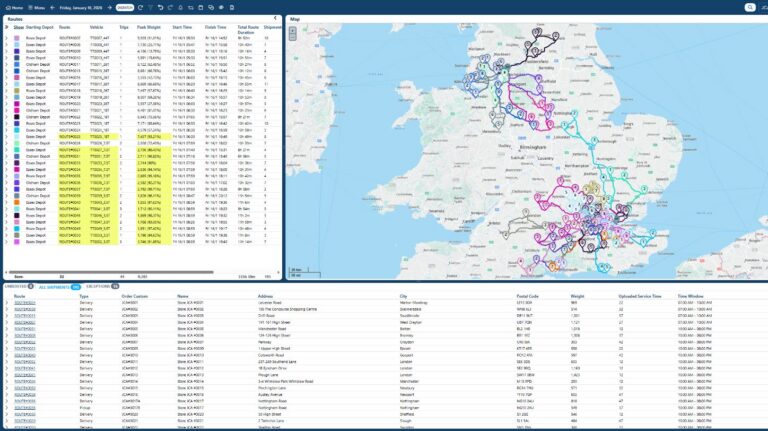
One established application is the use of historical traffic patterns by hour and day. AI can analyse stop and service times to help businesses plan more accurately, create realistic driver schedules and improve the likelihood of customers receiving goods and services on time and as expected.
The second use case is analysing large operational data sets. AI can process this information quickly and identify patterns that may otherwise be difficult to uncover.
Rather than making business decisions independently, it gives operators the insight needed to understand opportunities, threats, and areas of operational risk.
What advice would you give a fleet operator looking to invest in new routing and scheduling technology?
The first piece of advice is to think about the future before focusing solely on how the business operates today. Operators should consider their expected growth, any additional services they may introduce, and the wider opportunities they are exploring.
A technology platform may support the business today, but it must also be capable of supporting it tomorrow.
Businesses should work with a supplier that has a strong track record within their sector, rather than simply selecting a generic route-optimisation solution.
Finally, a reliable baseline should be created using recent operational data, and any software used should always be tested using your internal data.