

Peak periods expose more than capacity constraints.
They reveal how well a warehouse can understand change, communicate priorities and maintain employee confidence while pressure is increasing. Additional staff and extra shifts may help absorb higher order volumes, but they do not automatically create stable operations. What matters is whether managers can recognise why processes are deviating and whether employees still know where they stand throughout the shift.
This is particularly visible in order fulfilment and picking. During seasonal peaks, promotional campaigns or unexpected surges, order profiles can change within hours. Travel routes shift, priorities are revised and bottlenecks move from one area to another. Managers must make decisions quickly, while employees are expected to maintain both speed and accuracy. If operational information lacks context and feedback arrives too late, the warehouse becomes reactive.
Seeing the Cause, Not Just the Deviation
Most warehouses have access to performance data. Dashboards show throughput, backlogs and error rates, but they do not always explain why a process is falling behind or how a local delay may affect downstream operations.
During a peak, this distinction becomes critical. Not every deviation requires intervention, while some apparently minor issues can quickly disrupt several processes. Managers therefore need more than alerts. They need an operational view that connects individual developments with the wider process context.
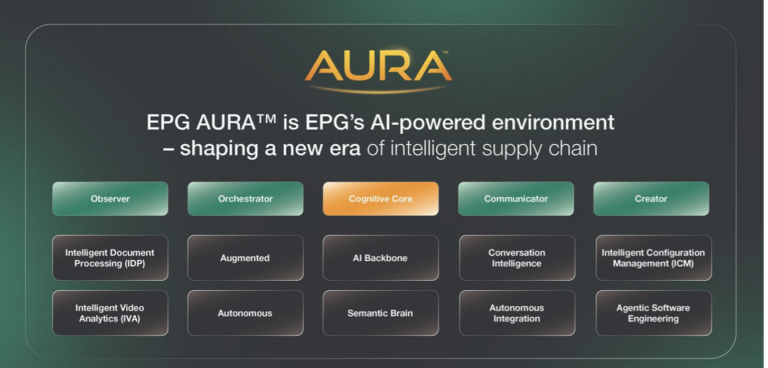
This is where operational intelligence can strengthen decision-making. EPG AURA, the AI-native environment for supply chain execution, brings together relevant information from ongoing operations and helps decision-makers understand developments sooner. Instead of treating each status update in isolation, it supports a more contextual assessment of where intervention is necessary and where a process may stabilise without additional action.
Keeping Employees Oriented
Peak performance also depends on the people carrying out the work. In picking, employees may process hundreds of consecutive orders while receiving little indication of how their performance is developing. Targets may be visible at the start of the shift, yet feedback often arrives only after the work is complete.
Voice-directed processes provide a useful foundation for changing this. Employees receive instructions and confirm actions through listening and speaking, without having to stop, handle a device or look at a screen. Because this dialogue is already part of the workflow, it can also provide timely feedback without creating an additional task.
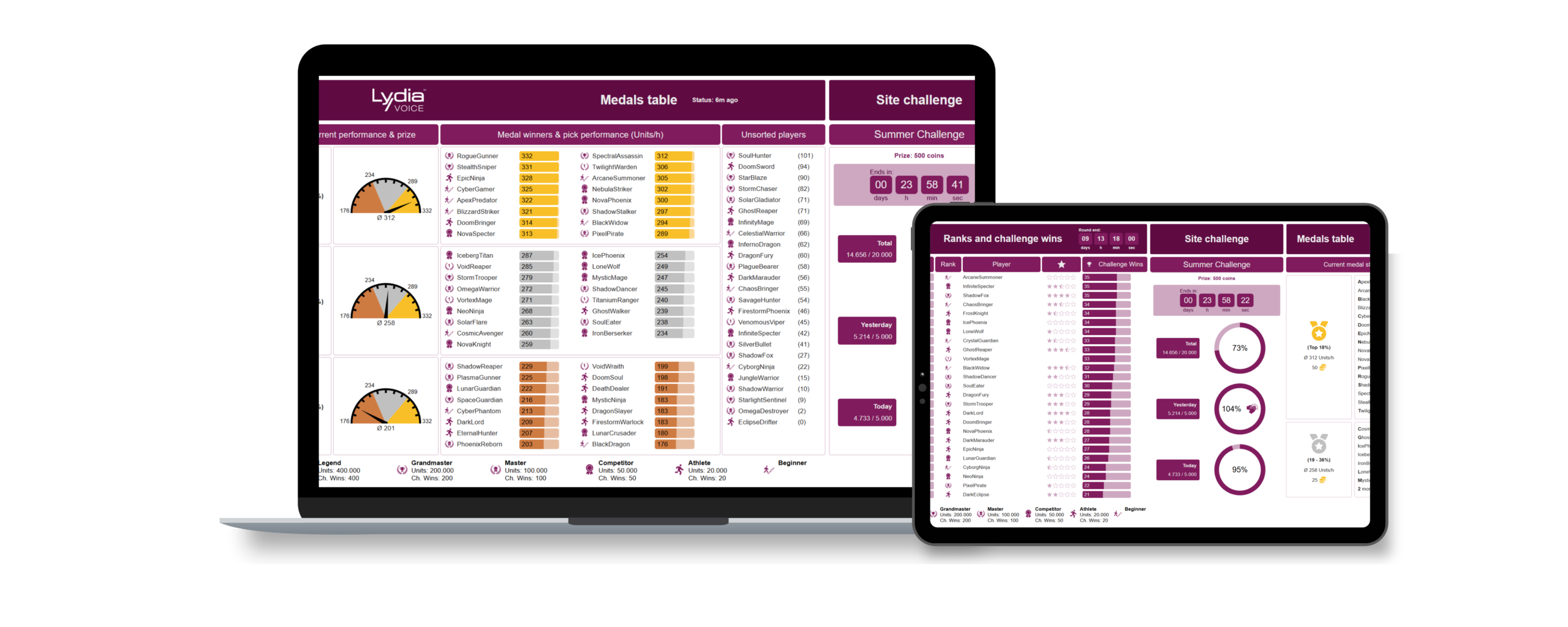
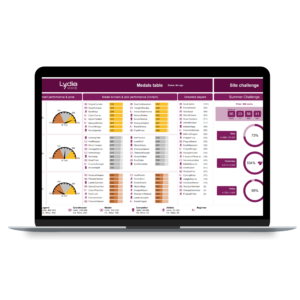
LYDIA Gamification extends this interaction with personal goals, progress levels, medals and team challenges. The purpose is not to turn warehouse work into a game. It is to make progress visible at the moment when employees can still respond to it. Feedback can be provided during suitable movement phases between picks, while the order fulfilment process remains the main focus.
Progress Without Additional Pressure
Performance visibility must be designed carefully. Public rankings and constant individual comparison can increase pressure, particularly when employees have different levels of experience or work under varying conditions.
A more sustainable approach focuses on personal development and shared objectives. Achievable goals help employees assess their own progress, while team challenges can reinforce collaboration. This supports motivation by strengthening a sense of competence rather than relying only on external rewards or stricter control.
A Warehouse That Can Adapt
Peak readiness is therefore not simply a question of how much additional capacity can be activated. It depends on whether the organisation can maintain direction as conditions change.
Managers need enough context to understand where action will have the greatest effect. Employees need clear guidance and useful feedback while they are still able to influence the result. EPG AURA and LYDIA Gamification address these two sides of operational readiness. One supports contextual decision-making, while the other makes progress visible within the picking process.
The result is a warehouse that does not wait for backlogs to grow or motivation to decline before responding. It remains capable of adapting throughout extended periods of high demand.
Find out how EPG AURA and LYDIA Gamification can help your warehouse maintain visibility, direction and operational stability during periods of high demand. Speak to our experts to discuss your peak-readiness strategy.